The Lyric Opera’s production of ‘Medea’ proves opera isn’t archaic as people would like to think.




Gilded ribbons, wrapped around the stage like a ribcage, draw the viewer’s eye to penetrating eyes and a mouth ajar. A baton swings and orchestral melodies swell and collapse into more gentle, lyrical passages.
Rising above the music is the tenacious voice of international soprano powerhouse Sondra Radvanovsky, a Chicago native, commanding the stage in the Lyric Opera of Chicago’s “Medea.” The show, directed by Sir David McVicar with music by Luigi Cherubini, opened Oct. 11 and runs until Oct. 26.
Based on the tragedy by Euripides, Cherubini’s “Medea” tells the grim tale of ruined marriage celebrations between Glauce and Giasone, two lovers who fall victim to the envy and vengeance of Giasone’s former wife, Medea.
Medea’s ire isn’t unfounded. After accompanying and rescuing her husband, Giasone, on his quests across the Hellenic world, she finds herself especially vulnerable as a lone woman, far removed from family and her native land.
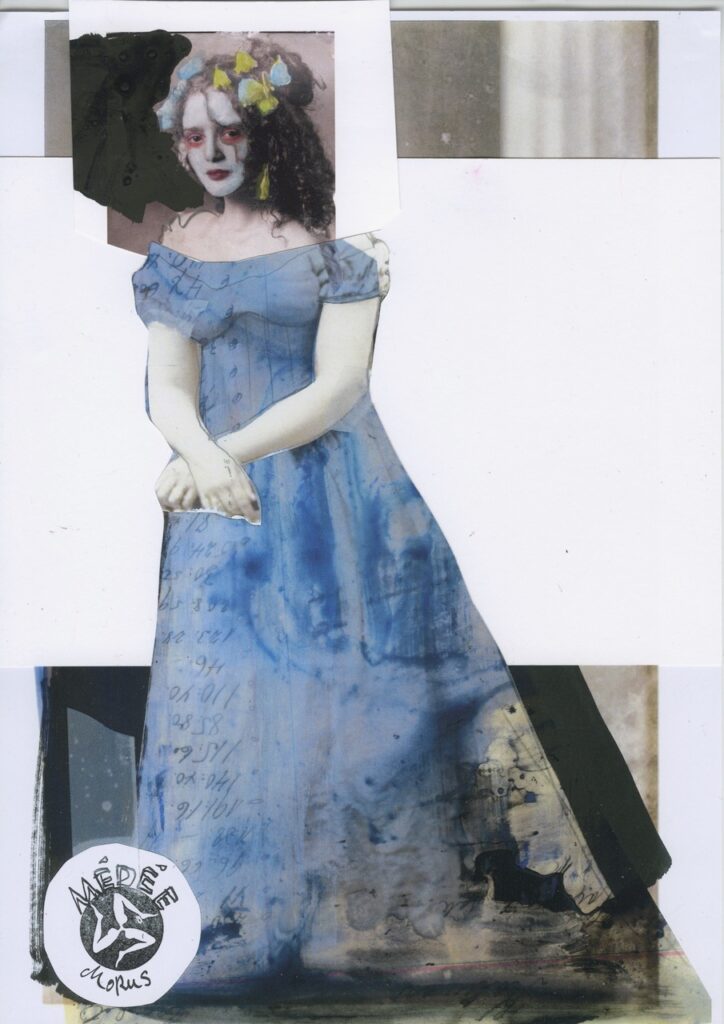
From the fatal love triangle to the throngs of royal guards and attendants, the performance is visually saturated with a sense of prestige and splendor from a bygone time, imbued with classical elements that refer back to the play’s ancient origins.
“David [McVicar] was very clear that he wanted the period in which the opera was written, which was in the late 1790s,” Doey Lüthi, a costume designer debuting at the Lyric, said. “It’s also historically an interesting time. It’s the transition from the romantic to classical period, and the Empire period harkens back to ancient Greece in its silhouette very clearly.”
Lüthi is a Swiss-born professional costume designer based in Berlin who studied at the New York University Tisch School of the Arts. Her involvement in “Medea” began during the COVID-19 Pandemic, as she invested the free time lockdown granted many artists and freelancers into realizing McVicar’s vision.
Despite Lüthi working remotely, she said she and McVicar collaborated closely, sending images back and forth.
Their tight cooperation allowed for the clean translation of the visual themes and styles of McVicar’s set to the costumes. To tie into the director’s somber and dilapidated aesthetic for the opera, Lüthi had the costumes hand-painted to imitate the environment in which the costumes came alive.
“We wanted a very entitled, wealthy colonial society,” Lüthi said. “I had every piece of fabric painted with stains that looked like water stains or mold growing on it.”
The laborious process culminated in a stark visual contrast — rich velvets and ornate ball gowns besmirched heavily with stains and grime. For Lüthi, the sullied garments stood in not only as a visual tarnish on these characters, but a moral one as well.
“I didn’t want realistic stainage,” Lüthi said. “I wanted it to be more metaphorical.”
The costumes, however, weren’t inspired solely by their director’s vision. Rather, Lüthi said they evolved alongside changing casts and environments, being reshaped and sometimes even rebuilt to accommodate the different body types and preferences of the performers who wore them.
“I try to help performers inhabit their characters in a way that’s very visceral and very close to who you are,” Lüthi said. “If you feel horrible in what you’re wearing, you can’t be confident. I would say 80 to 90% of my job is psychological support, and then if I can make them look the way I want them to look, that’s a bonus.”
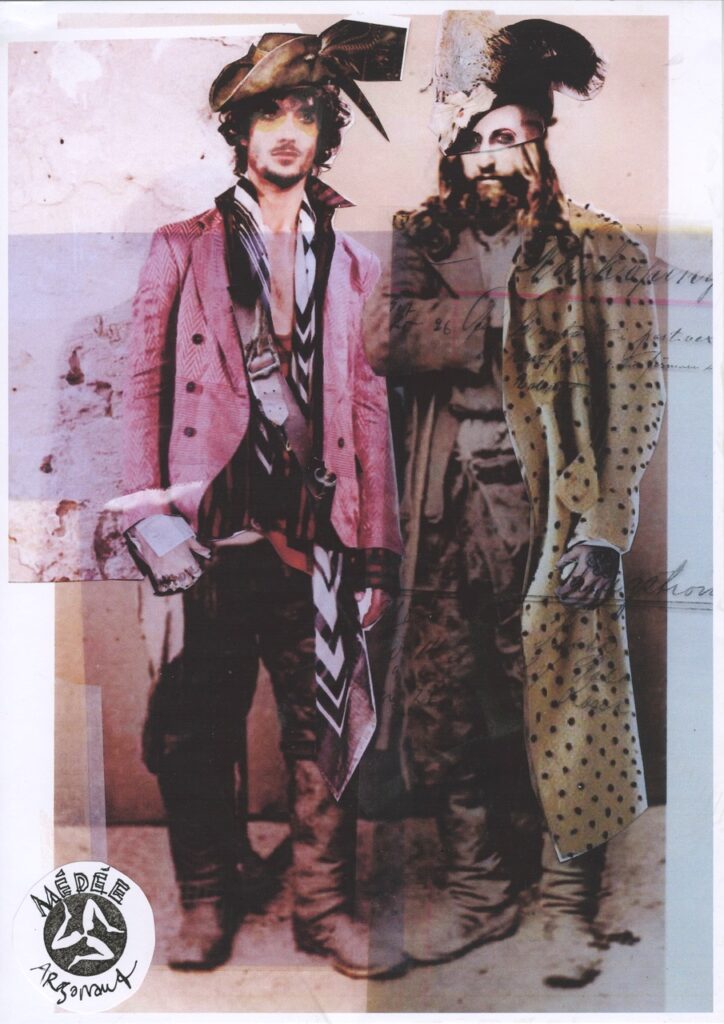
Performers weren’t the only factor Lüthi and McVicar had in mind while making costume edits for the Chicago show. Lüthi said the inescapable presence of ICE in the city also made its way into the opera’s visual narrative.
“We were handed a flyer on the first day of rehearsal — how to deal with ICE agents coming into our workplace, if they were to.” Lüthi said. “That’s a terrifying thing.”
So, Lüthi said McVicor requested she give some of the militia man-handling Medea to arrest and exile her masks “like we see every day on these agents.”
In this way, McVicar’s “Medea” hits close to home — the narrative serves as a cautionary tale against the dangers of unjustly exiling foreigners, a price Giasone and Glauce pay for in blood.
In the wake of nationwide anti-ICE protests, “Medea” reflects on injustice and violence, bringing pressing issues to center stage with an operatic flare usually regarded as detached from the modern world.
“It’s an art form that often feels very elitist and very far removed from every day,” Lüthi said. “I believe strongly that you can declutter all the decoration and all the opulence and draw people into the psychology of these characters. There are stories that are still relevant today, and there are still things that opera has to say.”