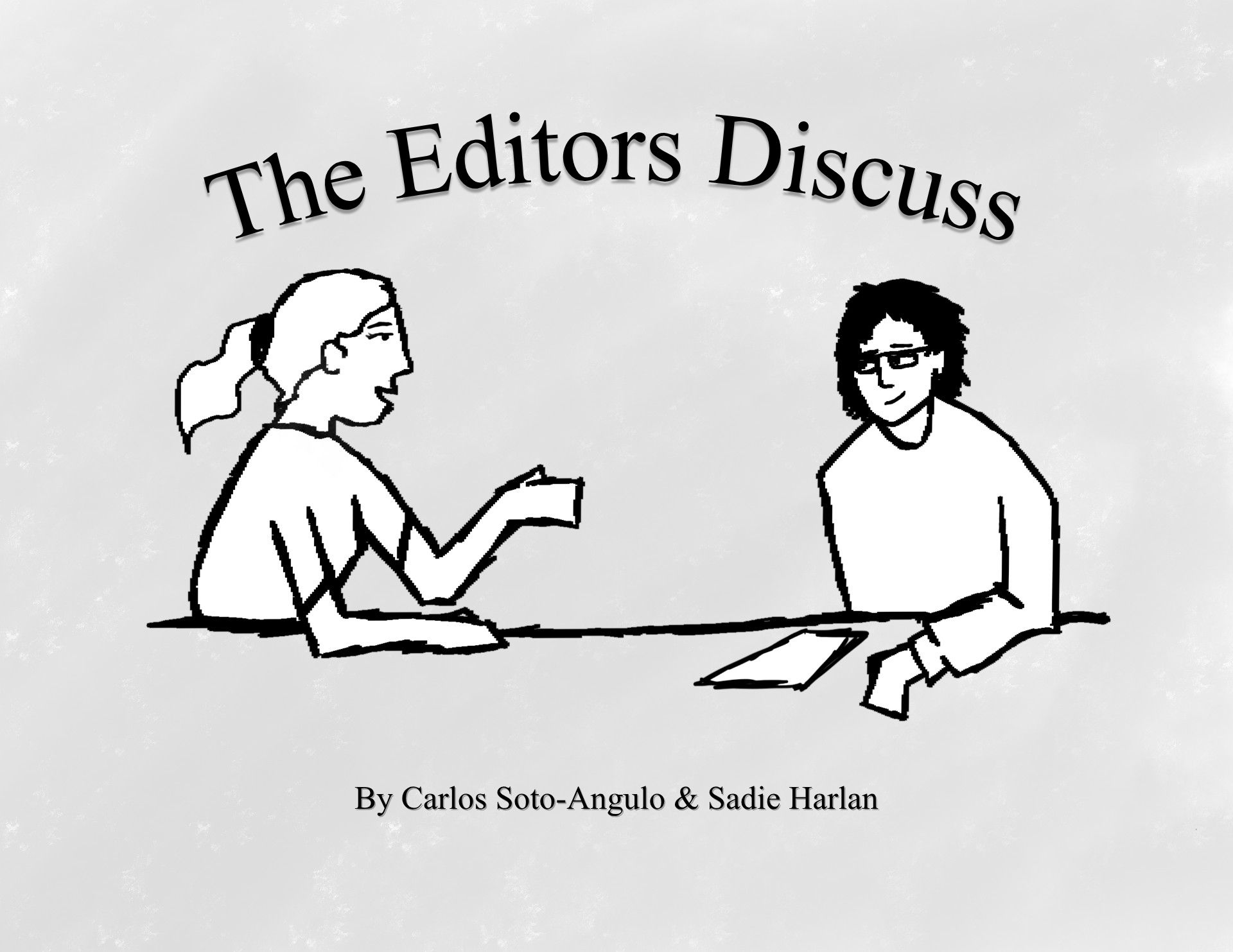
Deputy Opinion Editor Sadie Harlan and Opinion Editor Carlos Soto-Angulo discuss the pros and cons of paperback and hardcover books in the first installment of their weekly column, The Editors Discuss.



Paperback books:
By Sadie Harlan
There’s a certain allure to a mass-market paperback book. Small, cheap and cheerful, paperback books were created in 1935 with an important goal in mind: accessibility. Since then, readers have been grateful for the cheap and malleable alternative they provide to stubborn and expensive hardcovers.
Currently, new hardcover books cost anywhere between $20 and $30, over $10 more than the average mass-market paperback. Prior to the creation of the paperback, popular and good-quality books were difficult for readers on a budget to access, leading to education disparities caused by wealth inequality.
Without the creation of paperback books, reading and literacy wouldn’t be as accessible as they are today.
Now, paperbacks populate airport kiosks, used bookstores and the occasional backpack. Compared to their hardcover counterparts, they’re flexible and practical. Paperback books can be tucked into a pocket or hand, bent and folded to accommodate a reader’s wishes.
Paperbacks also provide a low-stakes canvas for readers who annotate. Because they’re easy to come by and affordable for readers, a bit of smudged ink or a misspelled word in the margins doesn’t need to be a cause for panic.
They’re perfect for college students looking for a physical copy of a book to mark up for classes without the commitment of high prices or pristine pages.
The flexibility and fragility of paperback books can also serve as a testament to the well-loved nature of a book.
A cracked spine and dog-eared pages are a physical representation of a reader’s interaction with their material. Old paperbacks may appear blemished and broken, but their imperfections are simply a result of the places they’ve been and the hands that’ve held them.
For those who buy used books, creased pages tell an unspoken story of a past reader and their reading journey, the pages they stopped on and the chapters they returned to.
Paperback books provide readers with a comforting and versatile reading experience that can fit in the palm of a hand or the bottom of a purse as needed, bending to fit the space they’re given.
Sure, it may take a little longer for a paperback edition to hit the shelves, but it’s well worth the wait for a portable, cheaper and easier-to-love edition of a favorite novel.
Hardcover books:
By Carlos Soto-Angulo
Mass-market paperbacks may have changed publishing culture by making books cheaper and easier to carry, but affordability isn’t the only way to measure a book’s value.
For readers who plan to keep, reread or share their books, a hardcover’s higher price can come with practical advantages a paperback can’t easily provide.
A hardcover’s rigid boards protect against the bending and crushing that can damage a paperback cover. Hardcovers are also often constructed with stronger binding methods than many paperbacks that use adhesive binding, which glues pages directly to the spine.
A paperback may be perfectly functional for a single trip or a semester, but frequent rereading can leave it with a cracked spine, loose pages or bent corners. A hardcover is better suited to survive years of page flipping.
Another advantage is the physical experience of reading. Hardcover editions are typically more substantial than mass-market paperbacks, giving publishers more space for typography, margins and cover design. The rigid cover also provides a stable surface while reading, whether a book is resting on a table or a reader’s lap.
For someone spending hours with a novel, the construction of the book can become an instrumental part of the reading experience rather than an afterthought.
The low cost of paperbacks can also encourage a materialistic relationship with books.
When a book is inexpensive and easily replaceable, buying another copy may seem more practical than preserving the one already owned. In a culture increasingly shaped by mass consumption and endless novelty — where products are frequently purchased, used and replaced — the paperback can become another disposable item.
This isn’t a new phenomenon surrounding paperbacks. The main sell of the item was its high volume and low quality, with early printing only becoming profitable after 100,000 copies of a book had been sold.
Hardcovers offer an alternative to this cycle.
Their higher price and sturdier construction can encourage readers to view a book as a lifelong possession rather than something to be replaced after a single read. A favorite novel can become part of a personal library, a reference for future work or a book passed between friends and family. The copy gains value through its longevity.
This isn’t to say paperbacks are inherently wasteful or that readers should avoid them. Their affordability remains important, especially for students and readers with limited budgets. But the environmental and material costs of producing physical goods complicate the idea that cheaper and replaceable goods are always more appealing.
Neither format eliminates the cost, but when a book is repeatedly replaced because its original copy has deteriorated, more materials are required to produce another one. A durable edition can at least be kept in circulation longer, whether it remains with one reader or moves to another.