The best stories featured in the opinion section from the 2025 to 2026 school year.




This year, the opinion section was a space for students, editors and faculty to platform their critique, observations and analysis to the Loyola, Rogers Park and Chicago community.
Our section stood as a forum for respectful, critical debate and discourse during a tumultuous year, for not only the United States, but for the Loyola community. Opinion also served as a place for writers to uplift meaningful causes and works they felt passionately about.
Each week, writers in the opinion section came with enthusiasm and zeal to cover topics as vast as contemporary international politics and as niche as the campus dining hall breakfast options. Yet, regardless of topic, writers of all kinds brought their own unique care and creativity to each and every piece they tackled this year.
Whether a weekly, guest or once-in-a-blue-moon writer, each individual’s time and effort shaped the form of the opinion section.
To those who contributed to the section in this past academic year, thank you for your passion, effort, patience, skill and collaboration. To those who read the opinion stories, thank you for your support, interest and the reason for writing.
‘El Mencho’s’ Posthumous Reign of Terror on Western Mexico
Originally published Feb. 25, 2026.
Content warning: Murder, terrorism, drug-trafficking
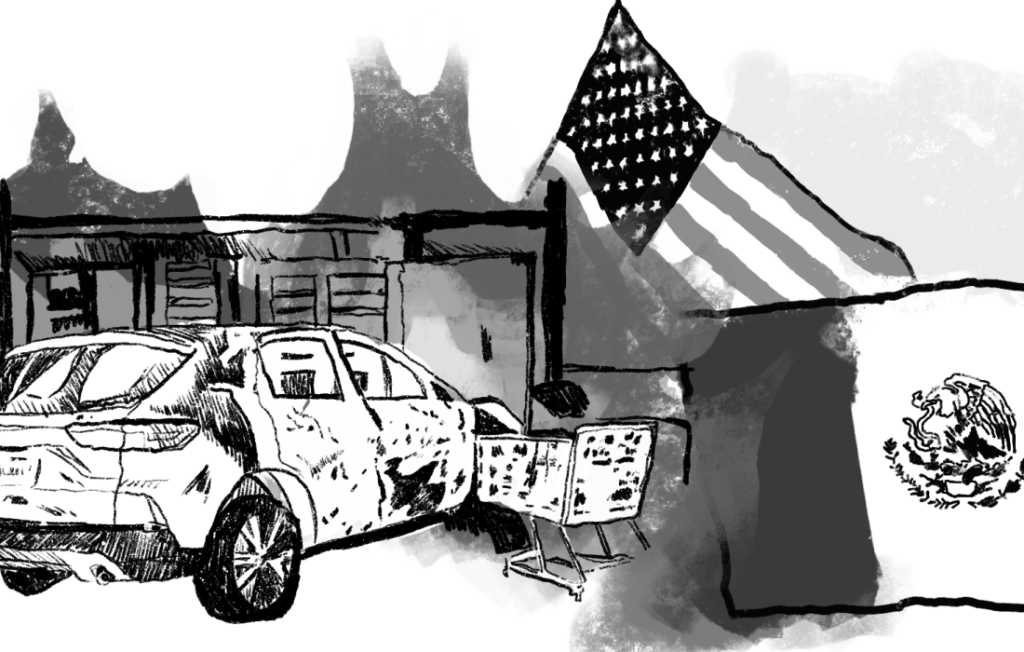
On the morning of Feb. 22, the Mexican army, in collaboration with American military forces, killed Nemessio Rubén Oseguera Cervantes — or “El Mencho” — the leader of the powerful Jalisco New Generation Cartel, or CJNG.
For residents in the area of western Mexico, the violence following his death is rapidly affecting daily life and security, leading many to question the intentions of Mexican authorities. While the removal of a major cartel figurehead is an important step toward the right direction, the immediate reaction of CJNG makes the action hard to justify.
Oseguera was one of Mexico’s most wanted criminals, with CJNG being considered one of Mexico’s most violent and fastest-growing cartels. Oseguera, alongside CJNG, is accused of trafficking fentanyl, methamphetamine and cocaine, and at the time of his assassination, the United States had a standing reward of $15 million USD for information leading to his arrest and/or conviction.
Mexico’s Defense Ministry says special forces carried out a major operation targeting Oseguera, with forces being attacked immediately when arriving at his location. During the standoff, Oseguera was critically wounded and died during air transfer to a medical facility.
Mexican forces seized heavy weapons, including rocket launchers, ammunition, tactical equipment and evidence of cartel operations.
About 137,000 .50-caliber rounds have been seized since 2012, with 47% coming from a plant in Kansas City, MO, according to the New York Times. Additionally, since October, Mexican authorities have seized 18,000 firearms, of which 80% came from the United States.
The Mexican government declared war on drug trafficking groups in 2006, and violence has rocked the country ever since, with around 480,000 people murdered in the past 19 years.
Read more here.

The Journalistic Diversity Problem: How is The Phoenix Responsible?
Originally published Oct. 22, 2025.
The Phoenix’s newsroom is incredibly talented, with a range of expertise over news, books, music, politics and science.
However, we’re not very diverse.
At The Phoenix, most of the editorial staff are white. Like many newsrooms, The Phoenix doesn’t yet reflect the diversity of the community it serves.
The Pew Research Center found that 52% of journalists say their organization lacks racial and ethnic diversity, compared to 32% who say it’s diverse.
This racial disparity in journalism isn’t unusual, but it does raise important questions about the stories we’re able to provide — and our ability to fairly portray our student body.
In the same study, 76% of journalists surveyed identified as white — higher than the share of U.S. workers nationwide who identify as white. 8% are Hispanic, 6% are Black and 3% are Asian.
Journalists have been trying to solve the issue of racial and ethnic inequity for decades.
Read more here.

Let’s Get Chalant
Originally published Nov. 12, 2025.
The nonchalant attitude pandemic may be the most catastrophic movement of the 21st century.
Nearly every social setting demands a person to limit their self-expression, and yet this new generation of young adults still imposes further restrictions on the self.
The worker should be orderly and efficient in the office, the young student must be silent unless spoken to and now every person has to be aloof to the world.
The coolest kids in middle school don’t care about school, sports or the political and economic state of the world. Future CEOs and presidents shirk public expressions of passion off like winter coats at the first sight of a groundhog in February.
This generation’s counter-culture isn’t a force of artistic creativity or a disruption of the status quo, but instead a count of someone’s aura and how many times a person can respond to sincere questions with vague, one-word answers.
Read more here.

Dining Hall Cereals, Ranked By Their Compatibility With Water
Originally published Nov. 12, 2025.
The curse of lactose intolerance claims the souls of nearly 70% of people worldwide. Though many of us unfortunate beings attempt to push through it, it becomes increasingly clear our bodies aren’t entirely fit to sustain milk-drinking, especially not with daily meals like cereal.
The solution, however, is closer than we may think. Countless companies push out unappetizing and, frankly, gross milk and dairy substitutes more frequently than the people need.
From almond to oat to even pea milk — the newest addition to Simpson Dining Hall’s dairy-free beverages — our often stale and usually reliable dining hall cereal goes overpowered. Waves of opaque milk-esque liquid crash over colorful puffed wheat like a wave over a lone raft. The milk substitute isn’t enough because it could never amount to the joy and flavor profile provided by real dairy.
The solution? Closer than we may think. Instead of expensive and bitter-tasting alternatives, why don’t we lose the idea of milk altogether?
When we’re focused on trying to find the perfect milk substitute, we lose sight of an innovative and possibly delicious option — one who’s vaguely free and also filtered from our favorite 22,300 square mile neighbor, Lake Michigan?
Yes, it sounds weird. Water in cereal isn’t the first option in a long line of liquids which could work as milk alternatives, but it isn’t outlandish. The main focus of a bowl of cereal is simple — the cereal. Milk shouldn’t be the reason why we’re eating cereal, rather the sugary and colorful bite-size pieces who come in rainbow-colored boxes.
Read more here.

‘Homeless Chic,’ Blue Collar Appropriation and My Frayed Jorts
Originally published Jan. 28, 2026.
In the summer of 2024, while lying under a tree in a public park during my lunch break, a woman approached me, to-go container in hand.
“Do you want this?” the 40-something-year-old asked, the styrofoam tray outstretched. “It must be so hard to live out here and be hungry, especially in this heat.”
Taken aback, I politely declined, hardly able to contain my laughter long enough for her to be out of earshot. After the initial shock of being mistaken for being unhoused wore off, I started to wonder why in the first place.
Working as an art camp counselor, admittedly, it looked like I wrapped a Jackson Pollock canvas around my torso. But even then, I’d hope a relatively well-meaning person would be able to decipher my shirt was stained with paint — not dirt nor grime. Especially because the camp’s logo was predominantly printed on the front.
It wasn’t until I looked down at my legs that I realized: my jorts.
This particular pair was given to me as a gift from my friend, after she cropped the legs off a normal pair of shorts, leaving the unhemmed rim exposed, stringy threads and all.
I’m not saying they looked trashy — they’re one of my favorite pairs of jorts — but I could see how someone could mistake them for being past their prime.
After this “encounter,” it made me reflect on my wardrobe as a whole.
Read more here.

Staff Editorial: What ICE Means for our Community
Originally published Oct. 26, 2025.
Over the weekend of Oct. 11, videos from Loyola students circulated across social media, spreading word that Immigration and Customs Enforcement (ICE) agents pointed a gun at a man in the 1200 block of West North Shore Avenue, behind Bellarmine Hall.
Due to the fast action of students, ICE’s location became somewhat common knowledge across campus, allowing individuals to take action to protect themselves.
This degree of protective community action left The Phoenix in awe of the resources gained by neighbors joining together to share information. Yet, while social media spreads knowledge quickly, it also has the potential to spread fear and misinformation.
As student journalists, we want to use our platform to create a consolidated location for verified ICE sightings to be shared within the community. Furthermore, we were disappointed by the lack of information given to students by the university after repeated ICE sightings. We have created a map of ICE sightings in Rogers Park and Edgewater which we have been able to verify. That information can be accessed here.
Read more here.
Looksmaxxing: The Rebranded Incel Ideology
Originally published Feb. 4, 2026.
Content Warning: Eating disorders, self-harm
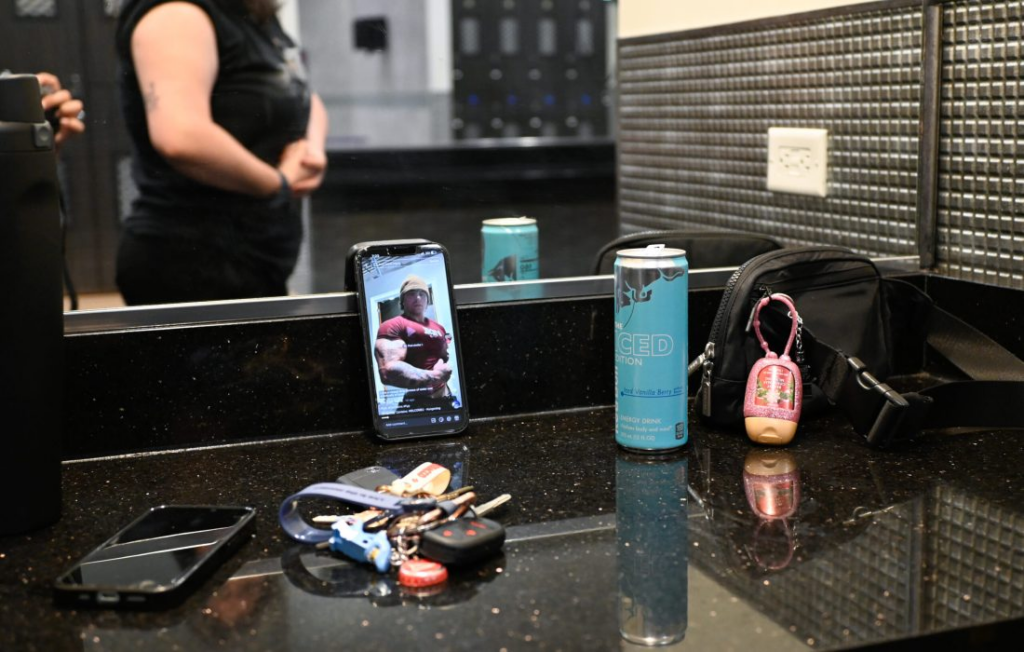
Some young adults may scroll feeds, compare jawlines and chase online validation. For many, a corner of the internet starting as self-help videos now seems to be a distorted mirror — one sharpened by incel ideology and a relentless focus on physical appearance.
A once fringe internet culture now creeps into mainstream youth and social media, which could alter how an entire generation views appearance and inner beauty. Beneath skincare routines and gym clips lies a worldview which reduces human worth to bone structure, fuels resentment and normalizes misogyny.
The term “looksmaxxing” — the practice of improving one’s physical attractiveness using drastic measures — didn’t originate in natural beauty discourse. The term was born in darker corners of the internet, like Reddit and 4Chan, within incel — shorthand for involuntary celibate — and “redpill” communities. These groups believe genetic luck and physical attractiveness determine success in love and life.
In practice, looksmaxxing shows up as constant self-surveillance. Online, it often involves following before and after content, facial analysis and advice which frames attractiveness as something to optimize or fix.
Additionally, dangerous ideologies like looksmaxxing have been closely tied with inherent racism, antisemitism and islamaphobia, with popular creators outwardly preferring white Anglo-Saxon features.
TikToks tied to incel slang — including, but not limited to “mogging,” “Physical/Shape/Looks (PSL) ratings” and “Chad vs. sub5” — have accumulated millions of views. Many posts present these ideas as jokes or motivation, but repetition dulls their humor.
Researchers say this is how extremist language becomes normalized, stripped of context, softened through humor and rewarded by algorithms.
Read more here.
Satire: Congrats! You’re Pre-approved for Serfdom
Originally published Feb. 18, 2026.
Welcome to Feudalism!
Don’t worry — this isn’t a downgrade. It’s more of a lateral adjustment. In fact, based on the skills from your former life — rent payment, debt tolerance and the ability to call exploitation “the market” — we’re happy to inform you’ve been pre-approved for peasantry!
Now, you may be thinking, “But I’m free.” Of course you are. You’re free to choose between your landlords, free to choose between dead-end jobs and free to choose between skipping your annual doctor’s appointment or a month of rent.
Nothing quite says freedom like choosing between three insurers who all agree your body is a pre-existing condition.
Us Americans already treat poverty as a moral failing, and wealth as the supposedly renowned proof of one’s toil, intellect and character. What capitalism so effortlessly rebranded as “meritocracy” is just feudal logic with extra steps. We love your cultural commitment to values of obedience thinly veiled as optimism, duress dubbed “personal responsibility.”
Yes, we know the use of the word “lord” instead of “boss” may take a little getting used to. Where boss implies you can leave, lordship implies you can try. If your lord seems unreasonable, remember you can always seek a better arrangement if another manor is hiring.
You might be wondering, “If I can’t leave, then what does the lord provide?”
Great question. In modern feudalism, your lord will provide nothing directly.
Read more here.

Guest Essay: Administrative Priorities Diverge from University Values
Originally published March 19, 2026.
In our classrooms, faculty in the humanities and social sciences grapple daily with basic questions about humanitarian values. As a recently hired adjunct instructor and a lecturer with over a decade of service to Loyola, we feel proud to work at a university whose stated social justice mission aligns with our own value commitments.
Our colleagues across departments also often feel the same, and although some of us may never have studied Latin, we endeavor to practice cura personalis — care of the whole person — and magis — the greater good — on the job and in our lives.
Loyola students also embody these values.
We’ve both observed how our students frequently exhibit a kindness that is reflected in their thoughtfulness and help to one another, in their questions, papers and projects, in their majors and long-term plans.
Over the past year, we’ve been both shocked and saddened at how radically the priorities of Loyola’s top administration seem to diverge from the values that constitute the core strength of this university. Foremost in our minds is how their values and priorities have been on display in their contract negotiations with non-tenure-track (NTT) faculty.
While faculty members at four-year institutions of higher learning are often perceived to be relatively privileged people, and those who’ve risen through the ranks can earn comparatively good salaries, this obscures the full picture. The overwhelming majority of students at Loyola are taught by part-time adjuncts and NTT faculty members, who comprise roughly half of the university’s teaching labor force, but just one-quarter of its labor costs, according to university management.
Read more here.

Campus Clash: Lake Shore v. Water Tower
Originally published Feb. 25, 2026.
For some Loyola students, the Lake Shore Campus’ (LSC) stunning views, mix of art deco and contemporary architecture and lively hustle-and-bustle of traditional college life may have drawn them to Loyola.
But LSC has more to offer than just visual appeal. The Rogers Park and Edgewater area boasts a variety of small businesses, community amenities and neighborhood appeal, which add to the Lake-Shore-area charm.
Just a hop-skip-and-a-jump away from campus are many public parks, beaches and walkable trails — one of which even goes through LSC, past the Information Commons. Yet in the winter months, one could go to the Edgewater library or cozy up in one of the many independent coffee shops near campus.
Yet, back to LSC itself, the area holds what may be the perfect mixture of city living and college life. One might get hit by a bus at the North Sheridan Road stoplight from the traffic trickling off Lake Shore Drive — but the thrill is just the magic of Chicago living at work.
To lift one campus up isn’t to diminish another. The Water Tower Campus has plenty of perks, especially during the freezing, windy months of the year — a time when LSC seems to have become a wind tunnel.
When walking on LSC, there are constant reminders of Loyola’s history.
From Mundelein Women’s college, through the historic statues on the quad and to the present history being made in each classroom alike — Loyola’s LSC has housed the lives of generations of students, faculty and staff members. The institution has then molded them, and then they molded it.
Read more here.
Originally published Jan. 28, 2026.
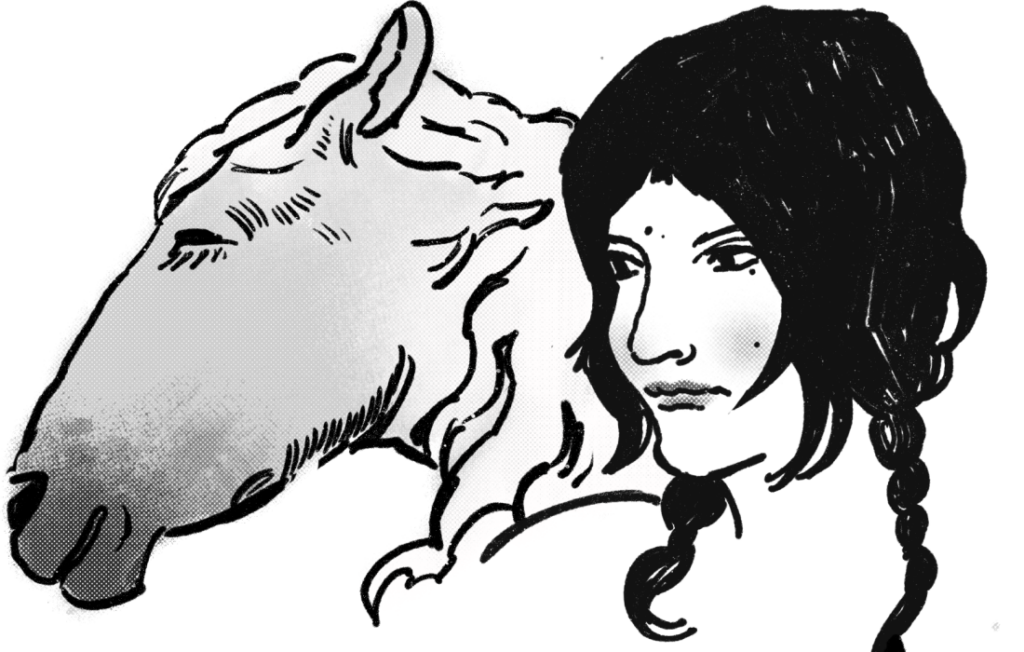
“Dear diary, when I grow up — I want to be a horse,” is scrawled sloppily in the margins of her sparkly unicorn diary. Next to the manifestation, she scribbles in a drawing of her future self.
First to appear on the page is glimmering wet eyes on a long face. After, a flowing mane is added. Then, a strong body on bounding legs follows. Finally, she creates a whole chromatic world to run free in, complete with a smiling sun wearing sunglasses.
This is her dream. And this was my dream: to be a horse.
Yes, oh yes, I’m a horse girl.
No, I wasn’t a run-of-the-mill equestrian sports enthusiast, nor was I a casual Breyer Horse enjoyer. I’m a bona-fide I-want-to-be-a-horse girl.
Nobody has to tell me — I know this is sort of strange. I’m certain I’m kin, or at least extended family, with the furry subcultures. Although I myself am not a furry or equine therian, our wild hearts roam the same field. I want the same things they want.
I, still, in my late-adolescent age, desired to be what a horse embodies.
In the Chinese zodiac, 2026 is the year of the horse. The horse is the seventh in the twelve-year sequence, it commonly seems to represent power, care, affection and beauty. In the spirit of the new year and my connection to the equine creature, I was inspired to delve into the many symbols of the horse.
Horses have symbolized a vast variety of concepts across history. The one-toed domesticated mammal has embodied both the paternal in Freudian psychology and the maternal in Jungian psychology. They’ve symbolized humankind’s triumph over nature while simultaneously embodying an essential freedom.
The horse can also be a symbol of the self, propelling one forward while containing multitudes.
Horses are like mirrors. Huge, rideable mirrors for humankind. In spite of the physical impossibility of transmogrifying into a horse, I’ve longed to reflect so in myself.
Read more here.

I Didn’t Choose to Live in a YA Dystopian Novel
Originally published Feb. 4, 2026.
It was fifth grade, and tears rolled down my cheeks as I closed the soft final pages of Lois Lowery’s “The Giver.” In this moment, dystopian novels claimed a permanent place in my heart. What I didn’t realize was cherishing this genre also meant I would one day recognize that I lived in a real-life iteration of my favorite novels. But this time, there were no pages to slam shut.
On Dec. 18, 2025, President Donald Trump announced the United States would hold its first “Patriot Games” in the fall of 2026 to celebrate the semiquincentennial anniversary of the country.
For those who’ve read or watched Suzanne Collins’ “The Hunger Games” franchise, the introduction of this four-day event in which one male and female-identifying high school student from each state compete against one another for athletic prowess was eerie.
Collins also created a televised game for her fictitious world with contestants of a similar age as those proposed for the Patriot Games, except her Hunger Games require the fatal elimination of fellow competitors in order for a victor to arise. This bloodlust is used as an annual reminder to the citizens of Panem of their failed rebellion preceding Collins’ original trilogy and the power of the Capitol in determining their fate.
While the U.S. may be far away from reaching the same level of atrocity during its sporting event, the same cannot be said with certainty about the current state of American politics and civil life.
War brutalities are overwhelmingly common, neighbors — even children — are being kidnapped and murdered on the street and the international policy of one of the world’s most wealthy, influential and militarily powerful nations is said to be guided by its leader’s whims.
Every time a social media user opens their phone, the algorithm submerges its user into the ever ebbing waves of unresolved political injustices. Civil unrest and uncertainty lives in every air particle as the top 1% push the overconsumption of media into the faces of civilians’ in hopes they’ll be too distracted to look up and notice the destruction they caused.
Read more here.
Where are the Merry and “Gay” Stories?
Originally published Feb. 25, 2026.
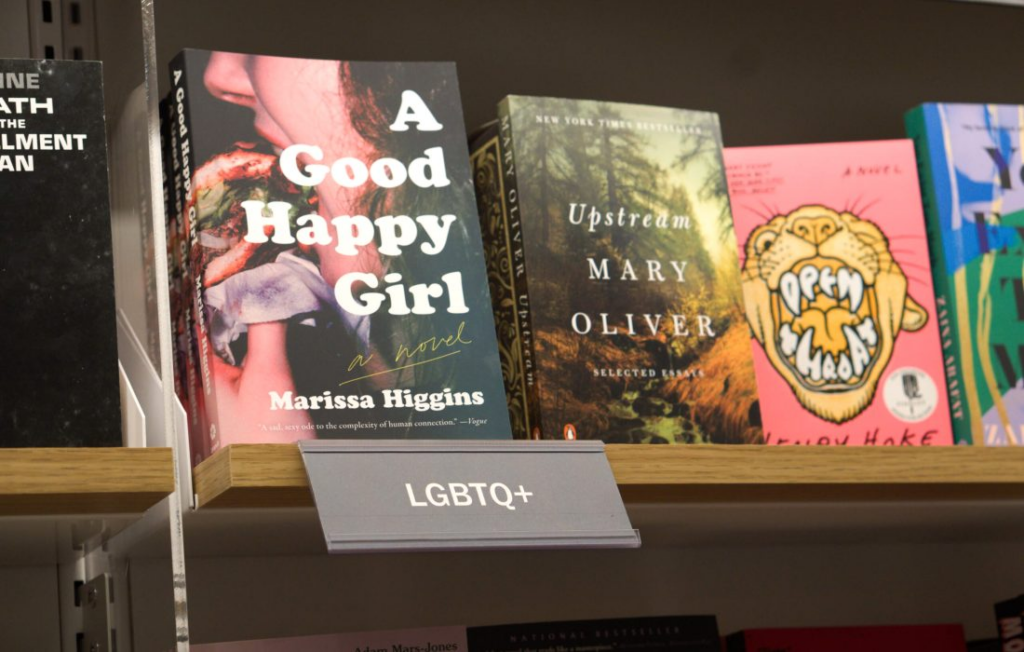
In the 1950s, a genre emerged within pulp fiction: lesbian pulp. With suggestive covers and erotic scenes, these books featured explicit homosexual relationships — but the endings were never satisfying.
Same-sex affection was still illegal in the United States at this point. Homosexuals were banned from federal jobs, deemed a “security risk,” and same-sex marriage wouldn’t be legalized for another 65 years. Queer relationships were seen as obscenities, and therefore authors couldn’t tell stories seen supporting this agenda.
For lesbian pulp — and queer stories in general — to be published amidst this turmoil, they abided by the “bury your gays” trope.
By killing off one love interest, making them turn out straight or generally having the ending turn out unhappy, authors could slip through a loophole in homophobic legislation. In this way, they managed to publish a form of queer representation, albeit disheartening.
Seventy-five years later, there are no laws against so-called sodomy in the United States, and queer couples are free to get married. While there’s still pushback against public queer representation, authors, screenwriters and everyone in-between are free to write as explicitly on queer topics as they want.
So why are queer characters still ending up unhappy?
Modern films and movies often focus on the tragedy of being queer. The “dead lesbian trope” was on the rise in the late 2010s, frequently killing off queer, usually female, characters — for example, Lexa from “The 100,” who dies as a direct result of her queerness.
The injustice felt isn’t merely the elimination of queer characters, however, it lies in the action of writing these characters to ultimately end up alone — whether it’s friendless, without a romantic love or completely dead.
Read more here.
Is it Too Soon to Make Sister Jean Death Merch?
Originally published Jan. 28, 2026.
Despite her death on Oct. 9, 2025, the face of the late Sister Jean Dolores Schmidt, BVM, is still visible everywhere at Loyola. She adorns signs, posters and T-shirts all marked with the signature maroon and gold. To students though, she was more than just her merch.
Schmidt represented the most positive Loyola values. She was caring, kind and open. People who met her seemed to love her, and people who hadn’t had the chance to meet her seemed to love her anyway.
Schmidt experienced and participated in more than a century of history. In her lifetime, she started a sports program at an elementary school, served as the dean of Mundelein before it merged with Loyola and served as our men’s basketball chaplain. She was a living testament to 106 years of American and Loyola history.
For Loyola to hastily monetize her memory seems disingenuous.
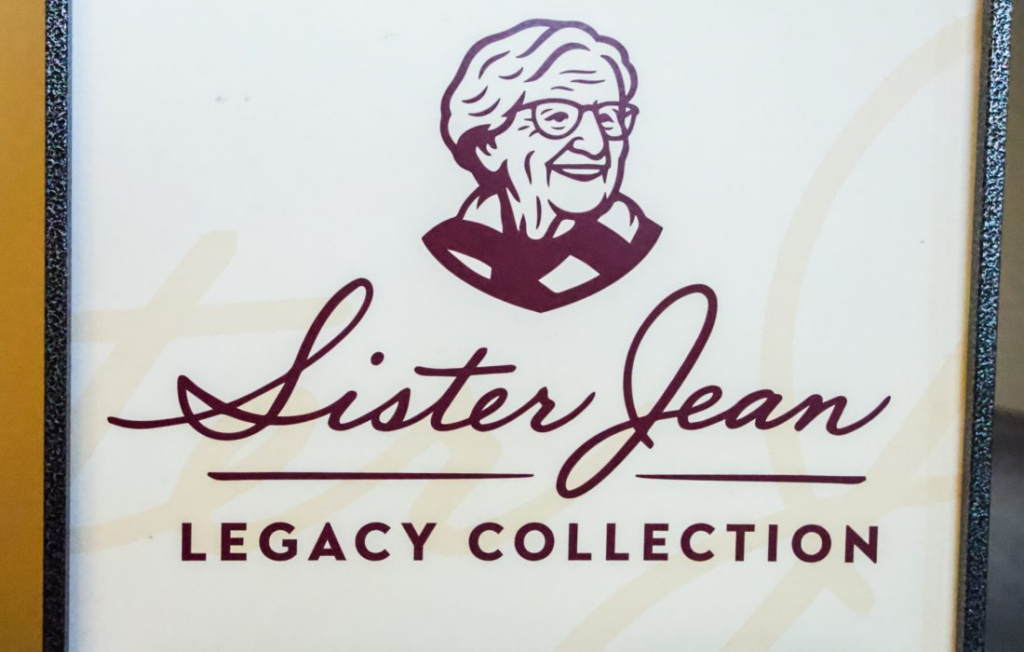
Less than two months after Schmidt died, Loyola Athletics announced on Dec. 4, the arrival of the “Sister Jean Legacy” collection. A portion of profits to go to the Sisters of Charity of the Blessed Virgin Mary, according to the website.
The line consists of about 25 pieces, ranging from apparel to pennants to bobbleheads, all modeled with a Sister Jean logo, flashy script typeface and vaguely mournful quotes.
“Always with us,” a shirt reads.
“Forever a Rambler,” says another.
Reactions to this decision seemed mixed.
Read more here.

Guest Essay: A Message To My Fellow Americans: True Support For Iranians Means Saying No to War
Originally published Feb. 18, 2026.
I spent nearly two years in prison for my political activism in Iran. I fled to Turkey and arrived in Chicago as a refugee. I started rebuilding my life from scratch. I was young, and I risked everything for freedom.
I also know what war does to countries like mine since I was born in the middle of the Iran-Iraq war; the war destroyed the Iranian civil society, which makes democracy possible.
Tensions between the United States and Iran escalate once again, and I’m witnessing a group of the Iranian diaspora, mainly monarchists, who live comfortably in Western democracies, are lobbying for regime change policy and calling for U.S. and Israeli intervention in Iran.
While they claim representation for all Iranians, they don’t represent me, the Iranian diaspora, and millions of Iranians who’re still living under the Islamic regime and fighting for changes and reform.
Frankly, as an Iranian dissident who’s paid the price for my political activities to bring a permanent democracy in Iran, I believe an anti-war position is the best support to Iranians.
A war with Iran will demolish the fragile networks of activists and the naive civil society who can fight for changes.
It’s important to understand why some diaspora voices push for regime change from inside democracies. I would explain it with the concept of “Exit Capital.”
Read more here.

Gun Violence Isn’t Just Political, It’s Civil
Originally Published Sept. 17, 2025.
On the evening of July 4, 2011, while dancing with her friends during a 4th of July celebration in an Independence, MO parking lot, eleven-year-old Blair Shanahan was struck in the neck by a stray bullet from a .900mm glock shot in celebratory gunfire.
Blair died at 9 a.m. the following day, July 5, 2011.
I had only met my older second-cousin, Blair, a handful of times. I had just turned five, and Blair was eleven. At my age, I found every older girl to be incredibly cool. I would have liked to show her my dolls and drawings. I was hoping she would get to babysit me soon.
Like Blair, Charlie Kirk, a far-right American political activist and co-founder of conservative organization Turning Point USA, was killed from a gunshot wound to his neck — fired during an event at Utah Valley University Sept. 10.
Kirk’s graphic death was recorded from multiple angles, clipped and posted online millions of times immediately after it occured. He was shot and killed in front of students attending his event, faculty working the event and his family — who were there to watch him.
These stories of violent gun deaths are not uncommon. Nearly every American I know, knows someone who has died due to gun violence. Their loved one had triumphs, accolades, low moments, emotional variety and the same dull, monotonous daily tasks we all suffer through.
Until they didn’t.
Read more here.